Private Mortgage Insurance (PMI): Costs, Rules and Removal
Learn when private mortgage insurance applies, what it typically costs, how to remove it, and how default insurance works in Canada, the UK and Australia.
Buying a home with a small down payment is common, but in many countries it comes with an extra cost that protects the lender rather than you. In the United States that cost is usually private mortgage insurance, or PMI. This guide explains when it applies, roughly what it costs, how to get rid of it, and how similar products work elsewhere.
Key takeaways
- In the US, PMI typically applies to conventional mortgages when the down payment is less than 20% of the purchase price.
- PMI protects the lender if you default. It does not protect you, your equity or your family.
- Under the US Homeowners Protection Act, you can usually request cancellation at 80% loan-to-value, and it must end automatically at 78% if you are current on payments.
- FHA loans carry their own mortgage insurance premium (MIP), which follows different and often stricter rules than PMI.
- Canada, Australia and the UK handle low-deposit lending differently, so the costs and removal options are not interchangeable.
What PMI is and when it applies
Private mortgage insurance is a policy a lender requires on a conventional (non-government) home loan when the borrower puts down less than 20%. If the borrower defaults and the home sells for less than the amount owed, the insurer covers part of the lender's loss.
The key measure is the loan-to-value ratio (LTV): the mortgage balance divided by the home's value. A 10% down payment means a 90% LTV. Above 80% LTV, PMI is generally required on a conventional loan.
Government-backed loans have their own arrangements: FHA loans use MIP, VA loans typically have no monthly mortgage insurance but charge a one-time funding fee, and USDA loans charge guarantee fees.
How PMI is paid
- Borrower-paid monthly PMI: the most common setup, added to your payment and the easiest to cancel later.
- Single-premium PMI: paid once at closing, in cash or rolled into the loan, and usually not refundable if you sell or refinance early.
- Lender-paid PMI: built into a higher interest rate, so it cannot be cancelled unless you refinance.
What PMI typically costs
PMI pricing depends on your credit score, down payment, loan term and property type. Annual premiums commonly fall somewhere around 0.3% to 1.5% of the original loan amount, with the lowest rates going to borrowers with strong credit and larger down payments. Treat that range as a rough guide; your quote may differ.
Worked example: what PMI costs and when it ends
Suppose you buy a home for $400,000 with 10% down. Your loan is $360,000 on a 30-year fixed mortgage at 6.5%, and your PMI rate is 0.6% per year.
- Monthly principal and interest: about $2,275
- Annual PMI: 0.6% × $360,000 = $2,160, or about $180 per month
- Total monthly payment before taxes and homeowners insurance: about $2,455
Your loan reaches 80% of the original value ($320,000) after roughly 95 payments, a little under eight years, if you make only the scheduled payments. It reaches 78% ($312,000) after roughly 109 payments, about nine years.
| Removal path | Approximate timing | Approximate total PMI paid |
|---|---|---|
| Request cancellation at 80% LTV | Around month 95 | About $17,100 |
| Automatic termination at 78% LTV | Around month 109 | About $19,600 |
| Extra $300 per month toward principal, then request at 80% | Around month 56 | About $10,100 |
Waiting for automatic termination costs roughly $2,500 more than requesting cancellation. Extra principal payments bring both thresholds forward; the mortgage calculator can show how much.
How to remove PMI in the US
The Homeowners Protection Act sets minimum rules for most conventional loans on primary residences closed since mid-1999. Lenders may offer more generous terms, but not less generous ones.
Request cancellation at 80%
You can ask your servicer in writing to cancel PMI once your balance is scheduled to reach, or actually reaches, 80% of the home's original value (usually the lower of the purchase price or the appraisal at closing). Typical conditions include a good payment history, being current, and sometimes proof that the home has not lost value and has no second liens.
Automatic termination at 78%
If you are current, the servicer must end PMI automatically when the balance is scheduled to reach 78% of the original value. A final termination point also applies at the midpoint of the amortization schedule.
Removal based on a higher home value
Some lenders will remove PMI based on a new appraisal if your home has risen in value. This is lender policy, not a legal right. Lenders often require you to have held the loan for a minimum period, commonly two to five years, and may require a lower LTV, such as 75%. Refinancing at or below 80% LTV also eliminates PMI, but the closing costs and new rate must make sense on their own.
PMI vs FHA mortgage insurance
| Feature | Conventional PMI | FHA MIP |
|---|---|---|
| Minimum down payment | Often 3% to 5% | Typically 3.5% with qualifying credit |
| Upfront charge | Usually none (unless single-premium) | Upfront premium, typically 1.75% of the base loan |
| Annual cost | Varies by credit score and down payment | Set by FHA; roughly 0.15% to 0.75% for most loans |
| Removal | Request at 80% LTV, automatic at 78% | With under 10% down, generally lasts the life of the loan; with 10% or more, typically 11 years |
| Credit sensitivity | Strongly priced on credit score | Less sensitive to credit score |
FHA loans can suit borrowers with lower credit scores. With good credit, a conventional loan with PMI often costs less over time because the insurance can be removed, and many FHA borrowers later refinance to drop MIP.
How other countries handle low-deposit mortgages
Canada
Canada requires mortgage default insurance on loans from federally regulated lenders when the down payment is under 20%. It is provided by the Canada Mortgage and Housing Corporation and private insurers. The premium is a one-time charge, typically roughly 2.8% to 4% of the loan depending on the down payment, and is usually added to the mortgage balance. In some provinces, including Ontario, Quebec and Saskatchewan, provincial sales tax on the premium is due at closing. Because it is paid up front, it cannot be cancelled later. Eligibility rules, such as the maximum purchase price, change from time to time.
Australia
Australian lenders commonly charge lenders mortgage insurance (LMI) when the loan-to-value ratio exceeds 80%. It is usually a one-off premium that can often be added to the loan, and costs vary widely by lender, loan size and LVR. Government home guarantee schemes and some lender waivers can reduce or avoid it for eligible buyers.
United Kingdom
UK borrowers rarely pay a separate premium today. Lenders instead price the extra risk into higher rates at higher LTV bands, such as 90% or 95%. Moving into a lower band at remortgage time is the main way to reduce that cost.
Common mistakes to avoid
- Assuming PMI will fall off on its own early. Without a request, you may pay until the 78% point.
- Choosing lender-paid PMI without comparing the long-term cost of the higher rate.
- Forgetting that PMI is usually based on the original loan amount, so it does not shrink as your balance falls.
- Draining your emergency fund just to reach 20% down.
- Refinancing only to remove PMI without counting closing costs.
Watch: a visual explainer
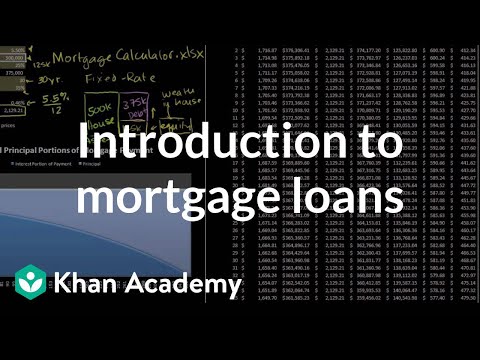
Video by Khan Academy, embedded via YouTube. Private.Finance is not affiliated with the creator.
Frequently asked questions
Is PMI tax-deductible?
In the US, the deduction for mortgage insurance premiums has expired and been revived by legislation several times. Whether it applies depends on the tax year, your income and whether you itemize, so check current rules with a tax professional before counting on it.
Can I avoid PMI with less than 20% down?
Sometimes. Options include VA loans for eligible borrowers, lender-paid PMI (which raises your rate instead), and piggyback loans that pair an 80% first mortgage with a second loan. Compare total cost, not just the monthly payment.
Does PMI protect me if I lose my job?
No. PMI protects the lender, and you can still face foreclosure if you fall behind. Products such as disability insurance are designed to protect borrowers and should be judged on their own merits.
Does extra principal really speed up PMI removal?
Yes, if you request cancellation. The 80% threshold can be met through actual payments, so faster paydown lets you ask sooner. Confirm your servicer's process in writing and keep payment records.
Want a professional to check this plan?
Tell us your goal and we'll introduce you to independent, fee-only advisors who fit. Takes about 60 seconds.
Keep reading
Private Wealth Management: Services, Fees and How to Choose
What private wealth management covers, who it suits, how firms charge, and how a small difference in annual fees can compound into a large sum over 25 years.
RetirementHow to Choose a Fee-Only Financial Advisor
Fee-only vs fee-based vs commission advisors explained, the credentials to look for by country, how to verify registration, interview questions and red flags.
RetirementHow Much Do You Need to Retire? The 25x Rule and Its Limits
Estimate how much you need to retire using the 25x and 4% rules, understand their caveats, compare FIRE variants and see how state pensions differ by country.